|
I am currently a PhD student at Boston University, where I am very fortunately advised by Professor Kayhan Batmanghelich. Previously I worked at Yale University for Professor Julius Chapiro and Professor James S. Duncan. I was also working closely with Professor Chenyu You. I obtained a Master degree in Computer Science at New York University. My research interests include computer & medical vision, and explainable machine learning. Email / LinkedIn / Github / Google Scholar |
|
|
|
|
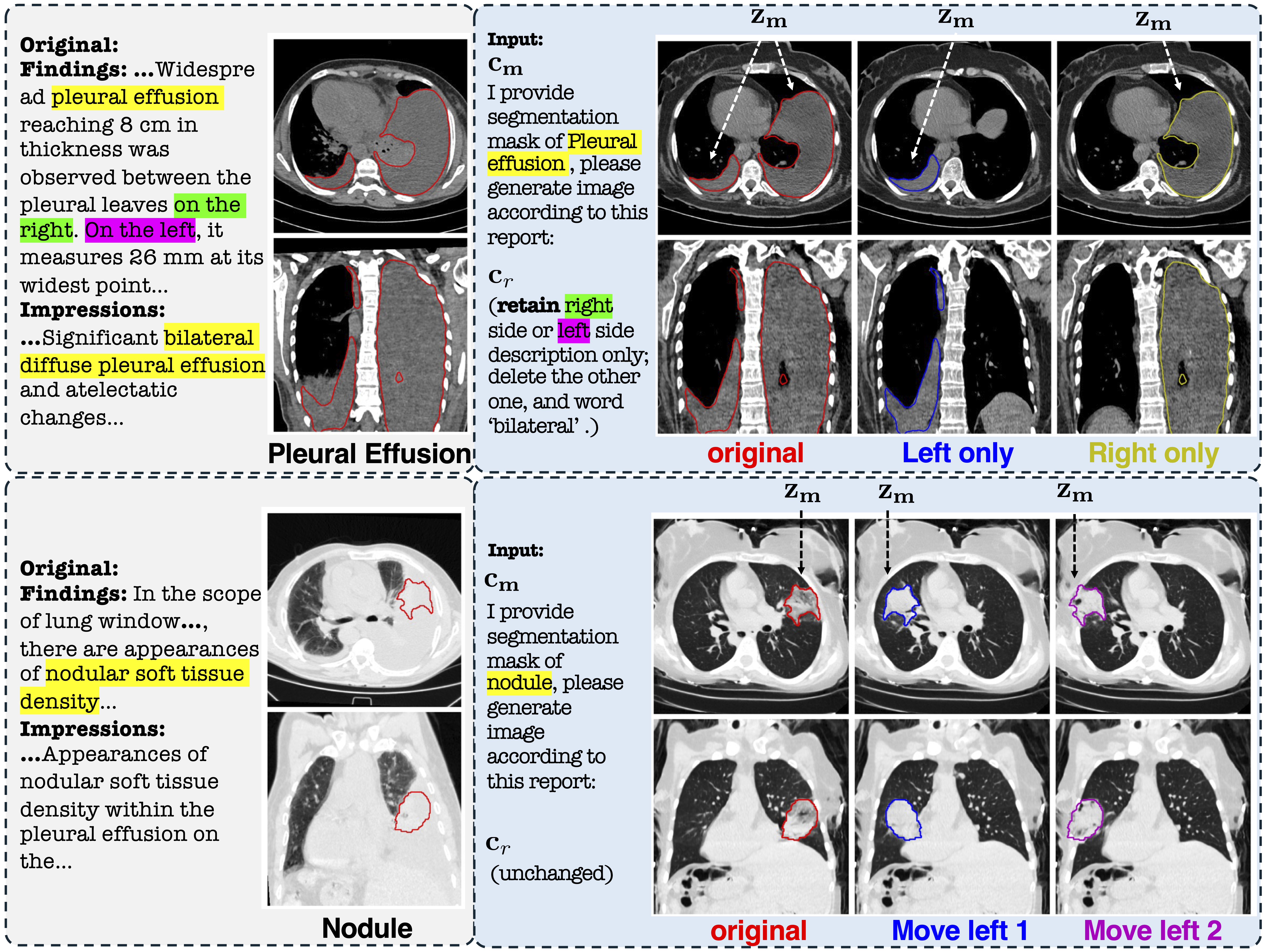
Weicheng Dai, Chenyu Wang, Shantanu Ghosh, Kayhan Batmanghelich, Accepted by European Conference on Computer Vision (ECCV 2026) In this work, we propose MedSynV2, a flexible multimodal framework for controllable volumetric image generation that supports input from radiology reports and segmentation prompts (both optional). Our approach allows users to provide segmentation of a specific anatomy or abnormality without requiring full-organ annotations. The semantic meaning of the segmentation mask is specified through an accompanying text description, resulting in a highly flexible and scalable conditioning mechanism. |
|
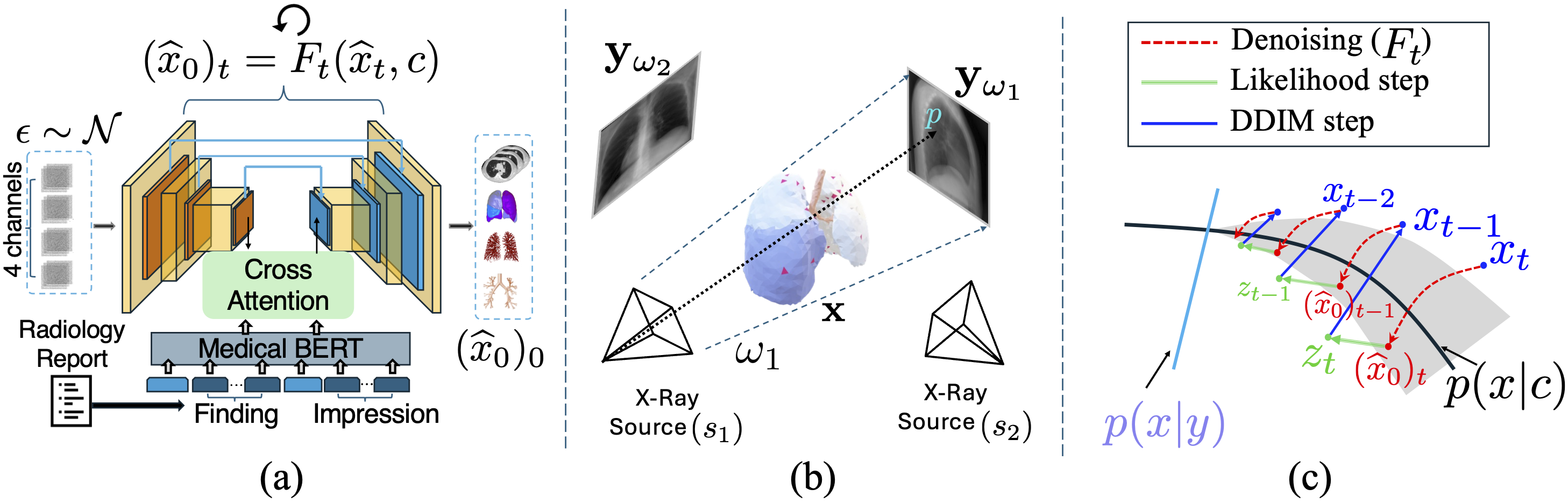
Weicheng Dai, Shantanu Ghosh, Kayhan Batmanghelich, Accepted by International Conference on Medical Image Computing and Computer Assisted Intervention (MICCAI 2026) PhyDiCT is a training-free, plug-and-play framework for reconstructing 3D lung CT volumes from sparse X-ray projections. It combines a differentiable physics-based forward model grounded in the Beer-Lambert law, a frozen text-conditioned diffusion model as a strong 3D CT prior, and split Gibbs sampling to jointly enforce projection fidelity and prior consistency. Without any task-specific training or fine-tuning, PhyDiCT outperforms fully trained CT reconstruction methods, achieving up to +7.5% SSIM on public 3D CT benchmarks. |

|
Chenyu You, Yifei Min, Weicheng Dai, Jasjeet S. Sekhon, Lawrence Staib, James S. Duncan, Accepted by The IEEE / CVF Computer Vision and Pattern Recognition Conference (CVPR 2024) In this work, we propose CFR, which focuses on exploring mitigating the reliance on spurious features for CLIP without using any group annotation. We showcase a lightweight representation calibration method for fine-tuning CLIP, by first generating a calibration set using the pretrained CLIP, and then calibrating representations of samples within this set through contrastive learning. |
|
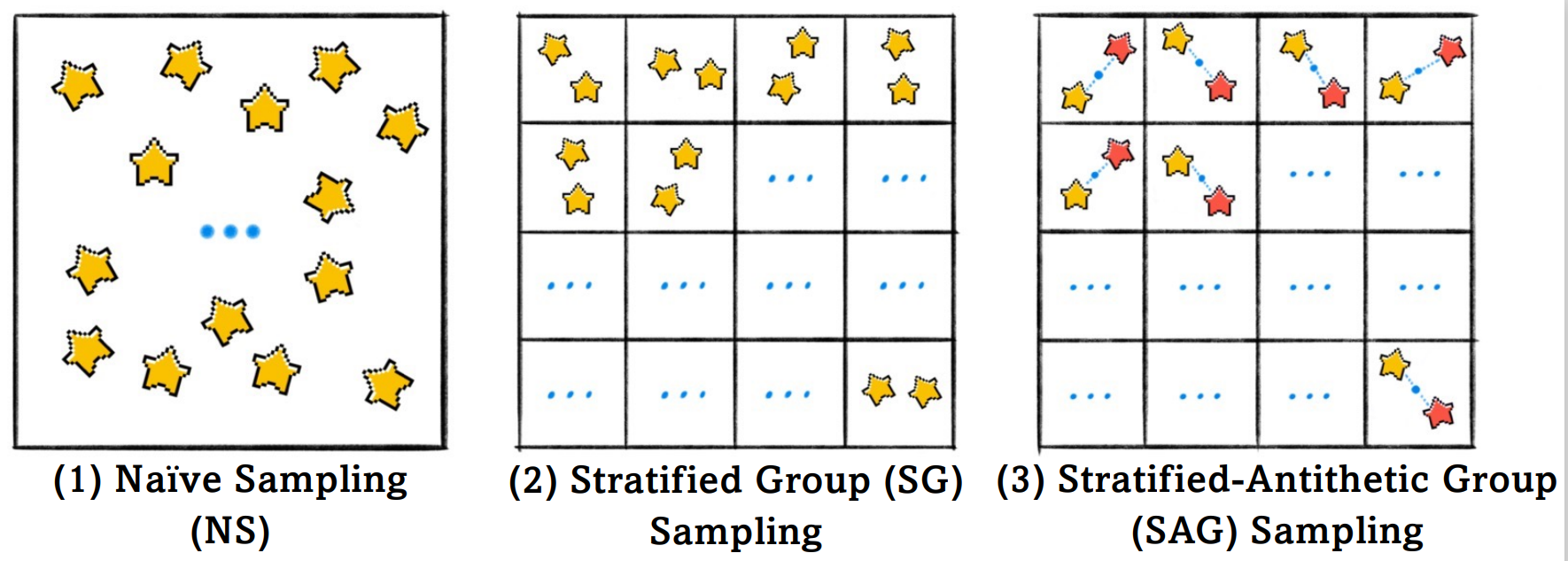
Chenyu You, Weicheng Dai, Yifei Min Fenglin Liu, Xiaoran Zhang, David A. Clifton, S Kevin Zhou, Lawrence Staib, James S. Duncan, Accepted by Conference on Neural Information Processing Systems (NeurIPS 2023) Two practical solutions via stratified group sampling theory that correct for the variance introduced by the common sampling practice, and achieve significant performance benefits. |

|
Chenyu You*, Weicheng Dai*, Yifei Min, Fenglin Liu, Xiaoxiao Li, David A. Clifton, Lawrence Staib, James S. Duncan, Accepted by IEEE Transactions on Pattern Analysis and Machine Intelligence (TPAMI 2023) (* denotes equal contribution) Three simple principles: (1) tailness: giving more importance to tail class hard pixels; (2) consistency: enforcing the feature invariances to specified data transformations; (3) diversity: ensuring anatomical diversity in the set of different sampled images in those imbalanced, unlabeled, and diverse scenarios. |

|
Chenyu You, Weicheng Dai, Yifei Min, Lawrence Staib, James S. Duncan, Accepted by Information Processing in Medical Imaging (IPMI 2023) In this work, we present ACTION, an Anatomical-aware ConTrastive dIstillatiON framework, for semi-supervised medical image segmentation. |

|
Chenyu You, Weicheng Dai, Yifei Min Lawrence Staib, James S. Duncan, Early accepted by International Conference on Medical Image Computing and Computer Assisted Intervention (MICCAI 2023) In this work, we propose MORSE, a generic implicit neural rendering framework designed at an anatomical level to assist learning in medical image segmentation. The core of our approach is to formulate medical image segmentation as a rendering problem in an end-to-end manner. |
|
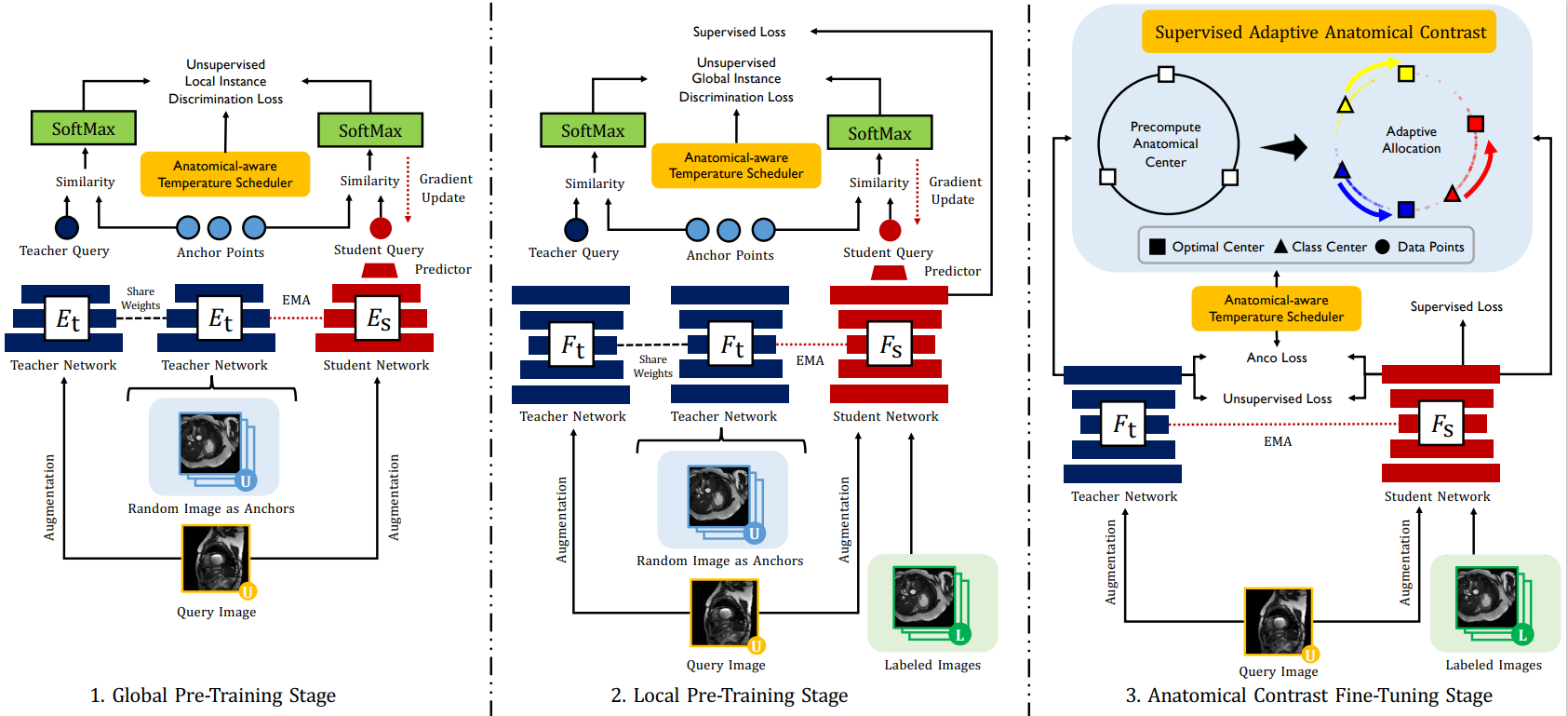
Chenyu You, Weicheng Dai, Yifei Min Lawrence Staib, Jasjeet S. Sekhon, James S. Duncan, Early accepted by International Conference on Medical Image Computing and Computer Assisted Intervention (MICCAI 2023) In this work, we present ACTION++, an improved contrastive learning framework with adaptive anatomical contrast for semi-supervised medical segmentation. We propose an adaptive supervised contrastive loss, where we compute the optimal locations of class centers uniformly distributed on the embedding space. We also use dynamic Tau to yield better separation between majority and minority classe. |